





Reflections on railway heritage
With nearly 2,100 listed structures on the rail network, and many more no longer owned by the railway, heritage interests and operational requirements must be balanced.

|
| The opening of the Stockton and Darlington Railway in 1825, drawn by JR Brown. |
Contents |
Introduction
Few will have missed that 2025 is a special year for Britain’s rail network. It is the bicentenary of the Stockton and Darlington, widely accepted as the first modern railway. But railways have existed for considerably longer than 200 years, so why the fuss over a provincial line in northeast England? The Stockton and Darlington was the first ‘modern’ railway that existed in a form we still recognise today. The trains were self-propelled. The public could use its trains, which they caught from stations. These concepts are not wildly different to today’s railway, and that is important.
Historic England had been preparing for the bicentenary for some years, with a Stockton and Darlington Heritage Action Zone established in 2020. Drawing together all the local authorities in the area and other stakeholders, the heritage action zone included significant research, a batch of new designations, and coordination of efforts to maintain and restore parts of the line.
Steam traction was still in its infancy in 1825, and although the S&D pioneered locomotive-hauled trains, early locomotives were too underpowered to climb hills. So the S&D included rope-hauled inclines where a rise in the land dictated them. Many are still discernible today, especially the famous Brusselton incline. Today the disused incline looks almost like a piece of prehistory, rising as an earthwork from the land, with stone sleepers still visible. Quite the contrast with the neoclassical lines of Skerne Bridge, now Grade I listed but continuing to support the passage of mainline trains, the role it has played for 200 years.
Historic England has undertaken several exercises in designation as part of the S&D heritage action zone, including identifying Heighington Station as the world’s oldest station. But these early stations were effectively inns, a natural progression from the days of the stagecoach when coaching inns were the stations of their day. One of the earliest surviving stations in original form that still looks like how we would build a station today – perhaps because it is one – is unassuming (but Grade II listed) Micheldever, on the London to Southampton Railway. It resembles an early Victorian villa, but with canopies to all sides opening on to platforms on the railway side. It remains very similar to how it was built in 1840.
The unremarkable everyday nature of Micheldever is perhaps what is so wonderful about railway heritage. It is these structures, these buildings, doing the same job for which they were designed, up to two centuries later. Brunel’s Great Western Railway, opened in stages from 1835, was designed with such foresight that trains are running at a frequency and speed that could not have been dreamt of in the early Victorian era.
While the passenger railway continues in much the same way that it always has, the transport of goods has altered beyond recognition. I contributed to a book The Railway Goods Shed in England, published by English Heritage (still available for free download), and concluded that the railway goods shed must be added to that short list of buildings which are still plentiful, but not one still serves its original purpose, such as pillboxes.
It is these types of structures that are most difficult to reuse creatively without them becoming museum objects or losing all sense of their original purpose. Much has been written about the very successful transformation of the Eastern Goods Yards at Kings Cross into a thriving mixed-use destination with a university at its core. What is great about it is the grain. The iron road imposed its linear grain across the country, but as the trains retracted (or in the case of Kings Cross, moved to the vast container ports at Felixstowe), how do you preserve that linearity long after the trains have departed? Stanton Williams’ superb University of the Arts conversion shows the way. Its Granary Building looms over a new public square, and the long transit sheds now house students and businesses, around a new concrete core where an internal street echoes the rigid geometry of the former sidings.
South of the former goods yards, the grand stations of St Pancras and Kings Cross are heaving with people, carrying many times more passengers than were ever envisaged. When I worked on Kings Cross during my career at English Heritage and Historic England, what always struck me about McAslan’s western concourse extension was how it was a triumph not just for conservation but for logistics of pedestrian flows.
There are two types of passenger at Kings Cross: the commuter who knows what platform their train leaves from and just wants to get through quickly, and the long-distance passenger who will arrive at least half an hour beforehand. They are offered a place on the mezzanine, where they can have a coffee and a seat in line with the departure boards before a graceful, curved bridge takes them through to the trainsheds. That elegant curve is dictated by the geometry of the Grade II-listed Great Northern Hotel, whose ellipse is shaped by the culverted Fleet River, which flows underground between St Pancras and Kings Cross. How pleasing that the shape of McAslan’s space-age extension has been imposed by successive pieces of historic infrastructure.
But this is London, and London has a different economy to the rest of the country. What is viable and necessary may be economically unsustainable elsewhere. This is where, at least on land owned by Network Rail, the Railway Heritage Trust can step in.
Conservation on the modern railway
The Railway Heritage Trust is a not-for-profit company funded by Network Rail to give grants. It has a long history (this year is its 40th anniversary) of filling the conservation deficit for historic buildings on the railway estate. Countless projects have benefited from the trust’s expertise, from community cafes to memorials, including several pieces of redundant infrastructure without a beneficial use. The architectural legacy of the railway is much richer for its involvement.
Although the Railway Heritage Trust is happy to advise, it is surprising that Network Rail does not have any internal conservation expertise. After the church, the state, and possibly the Canal and River Trust, the railways are one of the largest custodians of heritage assets in the country. As a statutory undertaker, they are often exempt from needing to apply for planning permission but not listed building consent.
All too often through my work I have seen sensible proposals delayed through planning or even fail due to their presentation by an engineer who does not speak conservation, and their analysis by a conservation professional who does not speak engineer. A translator is needed, and in-house heritage expertise could greatly assist Network Rail’s project planning. This will be all the more important as we move back to a publicly owned railway.
At a recent count there were nearly 2,100 listed structures on the rail network, with many more no longer owned by the railway. It can be a tricky job for Network Rail to balance heritage interests against operational requirements, and there are circumstances where deviating from established conservation practice is justified. Many listed stations on electrified lines have GRP daggerboards (the decorative valances around a canopy). While it is right that the owner of a listed home should maintain and regularly paint their windows, it is more of a challenge when decorative timberwork is within a couple of feet of cabling electrified at 25,000 volts. The power on a busy network cannot be turned off, so GRP valances are generally a justified proposition.
It is more difficult with larger pieces of infrastructure. Step-free access between platforms is clearly needed, but Victorian footbridges can rarely be adapted to take lifts. There have been attempts to make accessible footbridges in heritage locations, with varying degrees of success. Stratford-upon-Avon, for instance, has a nicely preserved GWR station served by mainline trains, but the new footbridge – a modern structure dressed up with GWR frills – is unfortunately hideous. What better, a sleek but recessive new bridge in a heritage context, or this?
Gaps in the list
Network Rail is reluctant to accept any more listings on its network, but there are plenty of sites which in my view warrant designation, particularly those of the Edwardian and interwar periods which may have been overlooked during initial rounds of listing.
In London and the south east, neither Richmond nor Kingston stations are listed, despite their art-deco splendour. Both were designed by James Robb-Scott, a man who could turn his hand to many styles, from the Edwardian baroque of Waterloo’s victory arch to the sublime modernism of Surbiton, via neo- Georgian Ramsgate. There are also the modern stations of the Chessington Branch, generally rather unloved but capable of greatness with restoration. At Tunbridge Wells, the up-side Italianate station is listed, but not the magnificent Edwardian baroque down-side buildings by Blomfield.
Many Victorian stations are unlisted. Jacobean-style New Milton is one of the best on the Southampton to Bournemouth line. Italianate Lowestoft has no listing, and neither do the classic Cheshire Lines Committee stations at Irlam, Delamere and Knutsford. The latter has a particularly mad Tudor-revival style with a French renaissance tower.
Others are listed but would benefit from a revised entry. The joint station in my city, Bristol Temple Meads, is attributed to Matthew Digby Wyatt. But there is no evidence to substantiate this, other than a line in the first edition of The Buildings of England. Where did Pevsner dream this? Digby Wyatt was dead by the time Temple Meads was being built. Research by Bristol City Council’s conservation architect David Martyn has found evidence that the station was designed by local man Henry Lloyd, an architect who seems to have shunned the limelight. A revised list entry could correct this long-held error.
This article originally appeared in the Institute of Historic Building Conservation’s (IHBC’s) Context 186, published in December 2025. It was written by Simon Hickman, heritage director at Avalon Planning and Heritage, a consultancy with offices in Plymouth, Exeter and Bristol.
--Institute of Historic Building Conservation
Related articles on Designing Buildings Conservation.
IHBC NewsBlog
IHBC sponsors Gardens Trust event 23-4 Sept 2026
.jpeg)
'Learning from the Past, Shaping the Future’ takes place in Milton Keynes
Renovations to Frank Lloyd Wright's Fallingwater complete
.jpg)
World Heritage Preserved project opens house for tours again
Shakespeare Birthplace Trust places Hall's Croft on HAR Register
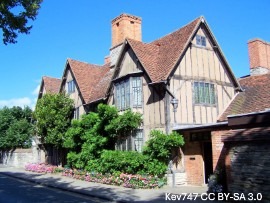
Stratford-upon-Avon home of Shakespeare's daughter is 'At Risk'
Lady Grange’s House repaired on St Kilda
.jpg)
National Trust for Scotland repairs stone cleit with link to famous island resident
Griff Rhys Jones on BBC Radio 4 Today programme
,_Green_Lane,_Derby.jpg)
The Victorian Society’s President unveiled its latest Top Ten Endangered Buildings 2026.
Need a MATE? Book your place now.

IHBC offers free webinars on applying for IHBC accreditation (Full & Associate).
UK Stained Glass Repository finds windows new homes
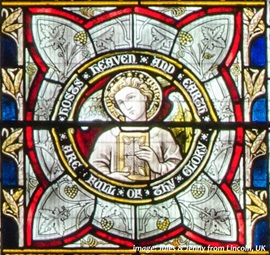
How are stained glass windows are rescued, stored and repurposed?
APPGEBE report sets high aims for quality
'Government must not sacrifice quality in drive to build 1.5m homes'
New measures protect Historic Shipwrecks from heritage crime

Underwater cultural heritage benefits from new HE guidance
How could the City of London skyline look in 6 years' time?

Visualisation shows approved planning applications as completed buildings
National Trust for Scotland calls for VAT cuts
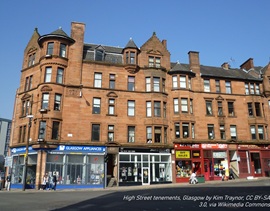
Heritage neglect is encouraged by current policies
IHBC's 'Context' Issue 186 features Industrial Heritage
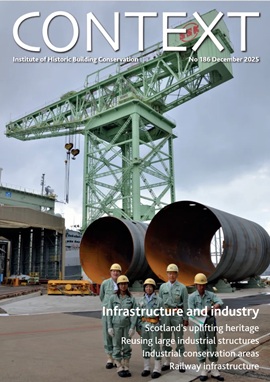
IHBC's members' journal reports on the challenges of conserving infrastructure
Book now for IHBC Annual School 2026

IHBC Annual School is taking place 18-20 June 2026 in Newcastle
RICHeS Research Infrastructure offers ‘Full Access Fund Call’

RICHeS offers a ‘Help’ webinar on 11 March
Latest IHBC Issue of Context features Roofing
Articles range from slate to pitched roofs, and carbon impact to solar generation to roofscapes
Three reasons not to demolish Edinburgh’s Argyle House

Should 'Edinburgh's ugliest building' be saved?
IHBC’s 2025 Parliamentary Briefing...from Crafts in Crisis to Rubbish Retrofit
IHBC launches research-led ‘5 Commitments to Help Heritage Skills in Conservation’
How RDSAP 10.2 impacts EPC assessments in traditional buildings

Energy performance certificates (EPCs) tell us how energy efficient our buildings are, but the way these certificates are generated has changed.